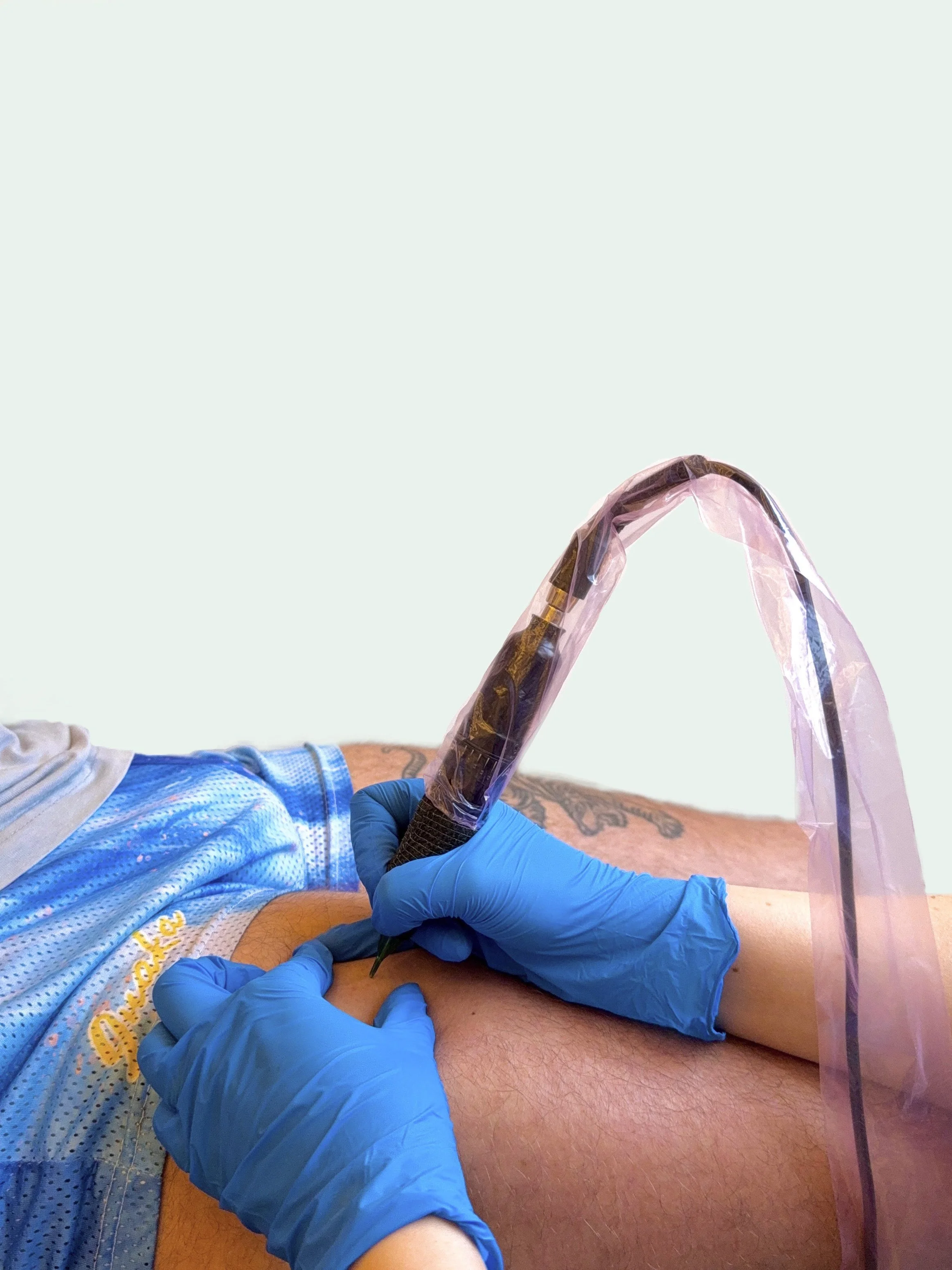
Skin changes such as scars and stretch marks are a natural part of the body’s healing process, and for many people they are simply a normal feature of their skin. For others, they can feel more personal, sometimes influencing confidence or reminding someone of a medical procedure, cosmetic surgery that healed unpredictably, an injury, pregnancy, or a difficult chapter of life they would prefer to move beyond. Healing can vary greatly from person to person, and scars do not always settle in the way someone may have expected. Treatments offered at KUU Skin Camouflage are not about erasing these experiences, but about supporting those who wish to gently improve their appearance and feel more comfortable and confident in their skin.
Stretch Mark Reduction
Begin Your Journey
If you’re considering medical tattooing or restorative skin treatments, you’re welcome to get in touch.
This initial conversation offers a gentle first point of contact, allowing each treatment to be carefully considered, bespoke, and tailored appropriately to you.
Stretch marks are visible lines that form on the surface of the skin when it stretches rapidly. This sudden stretching can cause the collagen and elastin fibres within the dermis (the middle layer of the skin) to tear.
In their early stages, stretch marks may appear red, pink or purple, before gradually fading into a silvery or pale tone as they mature.
Stretch marks commonly develop on areas of the body where the skin experiences natural expansion, including the abdomen, hips, thighs, breasts and upper arms.
What are Stretch Marks?
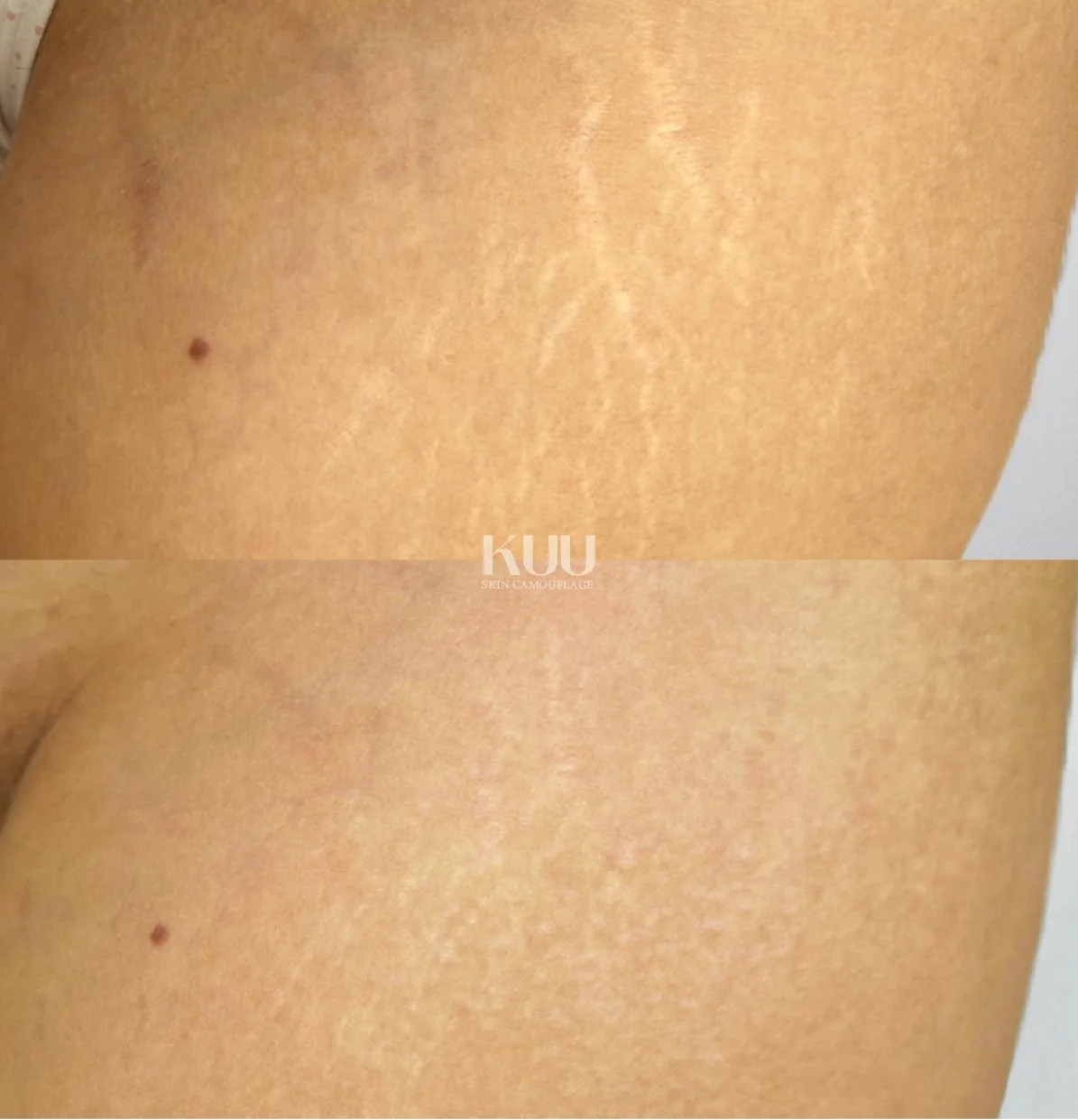
When the collagen and elastin fibres in the dermis are disrupted, the skin in that area becomes thinner and structurally different from normal skin.
Because there is less collagen supporting the skin, in some cases, the underlying capillaries can subtly show through the skin, contributing to the distinctive purple/ silvery colour of stretch marks.
Why do Stretch Marks Colouring Look Different to the Surrounding Skin?
Stretch mark reduction is usually performed as a course of treatments.
Most clients require approximately three sessions, spaced four to six weeks apart, although the exact number of sessions can vary depending on:
The age and depth of the stretch marks
The size of the treatment area
How the skin responds to treatment
Stretch marks are a form of scar tissue, so improvement occurs gradually over multiple treatments.
How many sessions are typically required?
Inkless medical needling works by creating controlled micro-injuries within the skin. Instead of pigment, medical-grade serums are introduced through the micro-channels created in the skin, allowing active ingredients to reach the dermis where they work in synergy to support cellular repair and tissue regeneration
These tiny insertions stimulate the body’s natural repair response, encouraging the skin to produce new collagen and elastin fibres. Over time this can help to:
Improve the texture and smoothness of stretch marks
Encourage more even pigmentation within the skin
Support the skin’s natural regenerative healing response
The treatment can also help stimulate melanin activity, which may support improved colour integration between the stretch mark and surrounding skin.
How does MCA Inkless Needling Help Improve Stretch Marks?
Stretchmark reduction is a minimally invasive restorative treatment designed to improve the appearance, texture and colour. While it is a considered and controlled procedure, it does involve opening the skin and, as with any skin-based treatment, carries potential risks.
Certain skin types require additional care. Individuals who are prone to hyperpigmentation, or who have previously experienced abnormal scarring following surgery or tattooing, may not be suitable candidates. Suitability is always discussed during consultation. Test patches will be performed in situations where skin needs to be approached with caution.
Active skin infections must be fully resolved prior to treatment.
Safety, Suitability & Considerations
Get in touch
If you’re considering medical tattooing or restorative skin treatments, you’re welcome to get in touch.
This initial conversation offers a gentle first point of contact, allowing each treatment to be carefully considered, bespoke, and tailored appropriately to you.