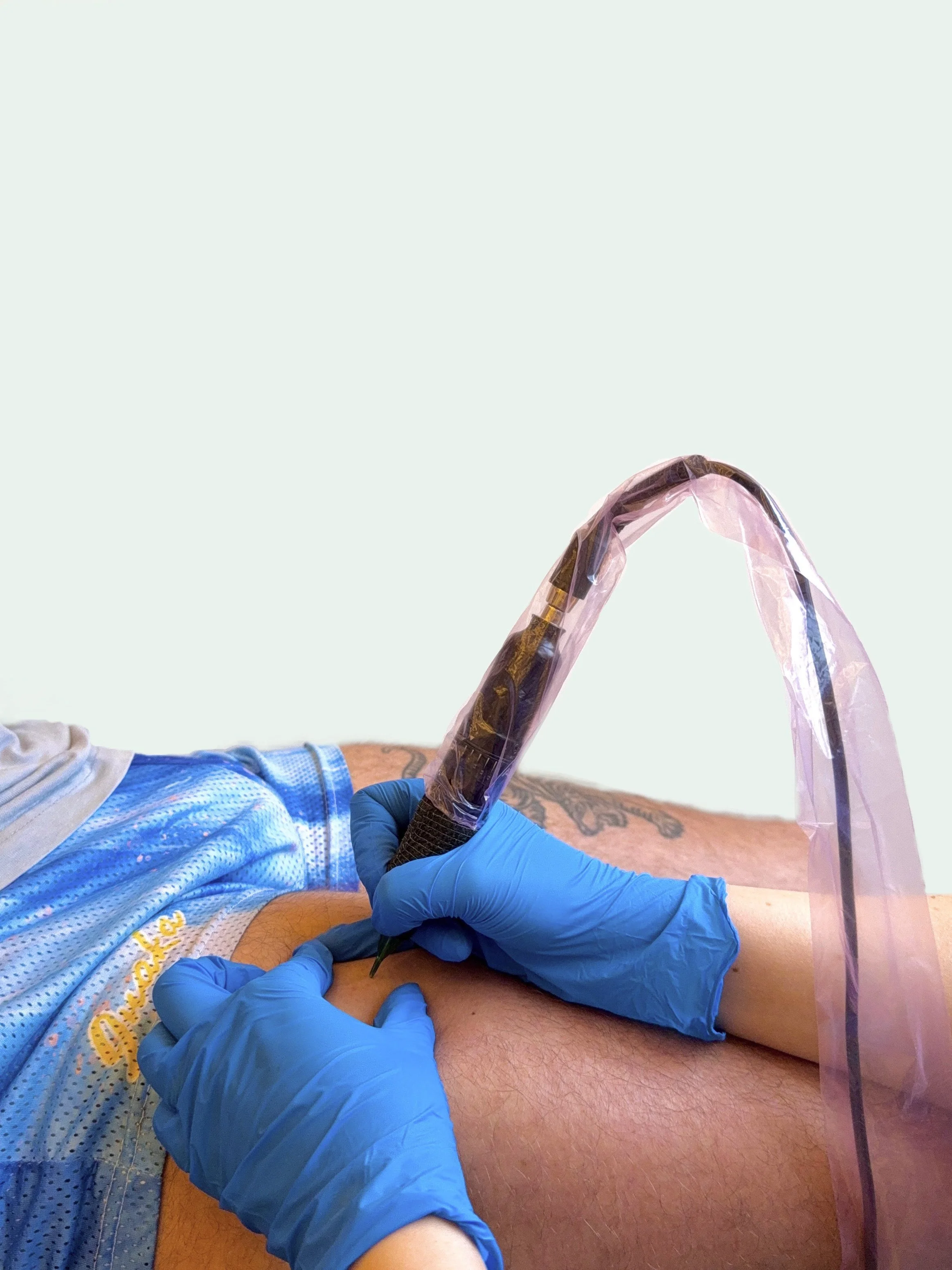
MCA Inkless Needling for Scar Revision
Skin changes such as scars and stretch marks are a natural part of the body’s healing process, and for many people they are simply a normal feature of their skin. For others, they can feel more personal, sometimes influencing confidence or reminding someone of a medical procedure, cosmetic surgery that healed unpredictably, an injury, pregnancy, or a difficult chapter of life they would prefer to move beyond. Healing can vary greatly from person to person, and scars do not always settle in the way someone may have expected. Treatments offered at KUU Skin Camouflage are not about erasing these experiences, but about supporting those who wish to improve their appearance and feel more comfortable and confident in their skin.
Begin Your Journey
If you’re considering medical tattooing or restorative skin treatments, you’re welcome to get in touch.
This initial conversation offers a gentle first point of contact, allowing each treatment to be carefully considered, bespoke, and tailored appropriately to you.
What is MCA Inkless Needling?
MCA stands for Multi-Trepannic Collagen Actuation.
MCA inkless needling is a medical-grade treatment that stimulates collagen remodelling through controlled, ink-free needling at therapeutic depths. It is used to soften and resurface scar tissue by guiding the skin’s natural repair process, supporting the regeneration of collagen, elastin, and melanocytes.
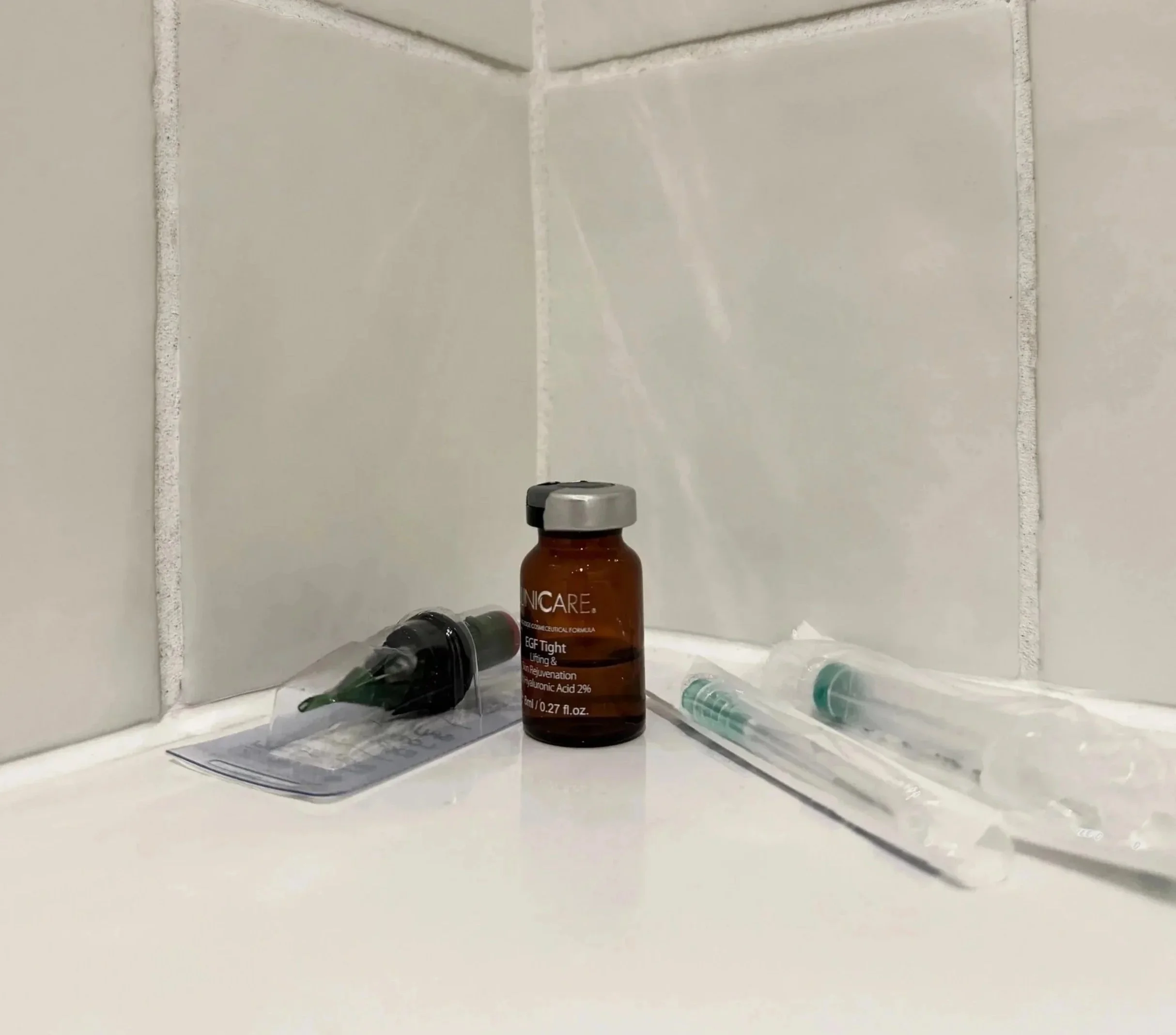
Medical-grade serums are introduced through the micro-channels created in the skin, allowing active ingredients to reach the dermis where they work in synergy to support cellular repair and tissue regeneration
What is the Difference Between Microneedling and MCA Inkless Medical Needling?
Both treatments work by creating controlled micro-injuries in the skin to stimulate collagen production, but they are designed with different purposes in mind.
Microneedling is a cosmetic treatment used to improve overall skin quality helping to smooth texture, enhance radiance, and soften fine lines through general collagen stimulation.
MCA inkless medical needling is a more targeted approach, used specifically for scar tissue and stretch marks. It works at carefully controlled depths to support the remodelling of damaged skin, improving texture, elasticity, and overall integration with the surrounding area.
Because scar tissue behaves differently to healthy skin, this treatment focuses on encouraging a more balanced and refined structure over time, rather than simply enhancing the surface.
In essence, microneedling enhances the skin, while MCA inkless medical needling works to restore it.
Who is MCA Inkless Medical Needling Suitable For?
MCA inkless medical needling is suitable for individuals with mature, stable scars or stretch marks who are looking to improve texture, flexibility, and overall skin quality.
It may be appropriate for a range of concerns, including surgical scars, burn scars, skin graft scars, raised or tight scar tissue, and stretch marks. Suitability is always assessed during consultation, taking into account skin condition, scar maturity, medical history, and realistic treatment outcomes.
What to Expect from MCA Inkless Needling?
MCA Inkless Needling works by creating precise micro-trauma into the scar tissue using a fine needle. These controlled micro-channels stimulate the skin’s natural repair response and encourage the tissue to regenerate in a healthier, more organised way.
During treatment, tiny pinpoint blood spots appear at the insertion points. This is a normal and expected response, indicating that the needle has reached the correct therapeutic depth within the skin. At this level, the body can begin delivering oxygen, nutrients, and growth factors to the treated area, which are essential for tissue repair and regeneration.
Immediately after treatment the area may appear red, slightly swollen, and dotted with small blood spots. This can make the scar look temporarily more noticeable at first, but this response is part of the normal healing process.
Inflammation (2–6 days)
During this stage, the body increases blood flow to the area and sends specialised cells to remove damaged tissue and support repair. Redness, warmth, and mild swelling may occur as part of this normal response.
Proliferation / Regeneration (5 days – 3 weeks)
New tissue formation begins. Fibroblasts within the dermis produce collagen and new blood vessels develop, helping to rebuild the structure of the skin and support the healing scar tissue.
Remodelling / Maturation (3 weeks – months)
Over time, the newly formed collagen fibres reorganise and strengthen. As this process continues, scar tissue may gradually soften, flatten, and improve in texture and appearance.
Scar remodelling is a gradual deep skin rejuvenation process, which is why improvements develop progressively over time and multiple treatments are often part of a treatment plan.
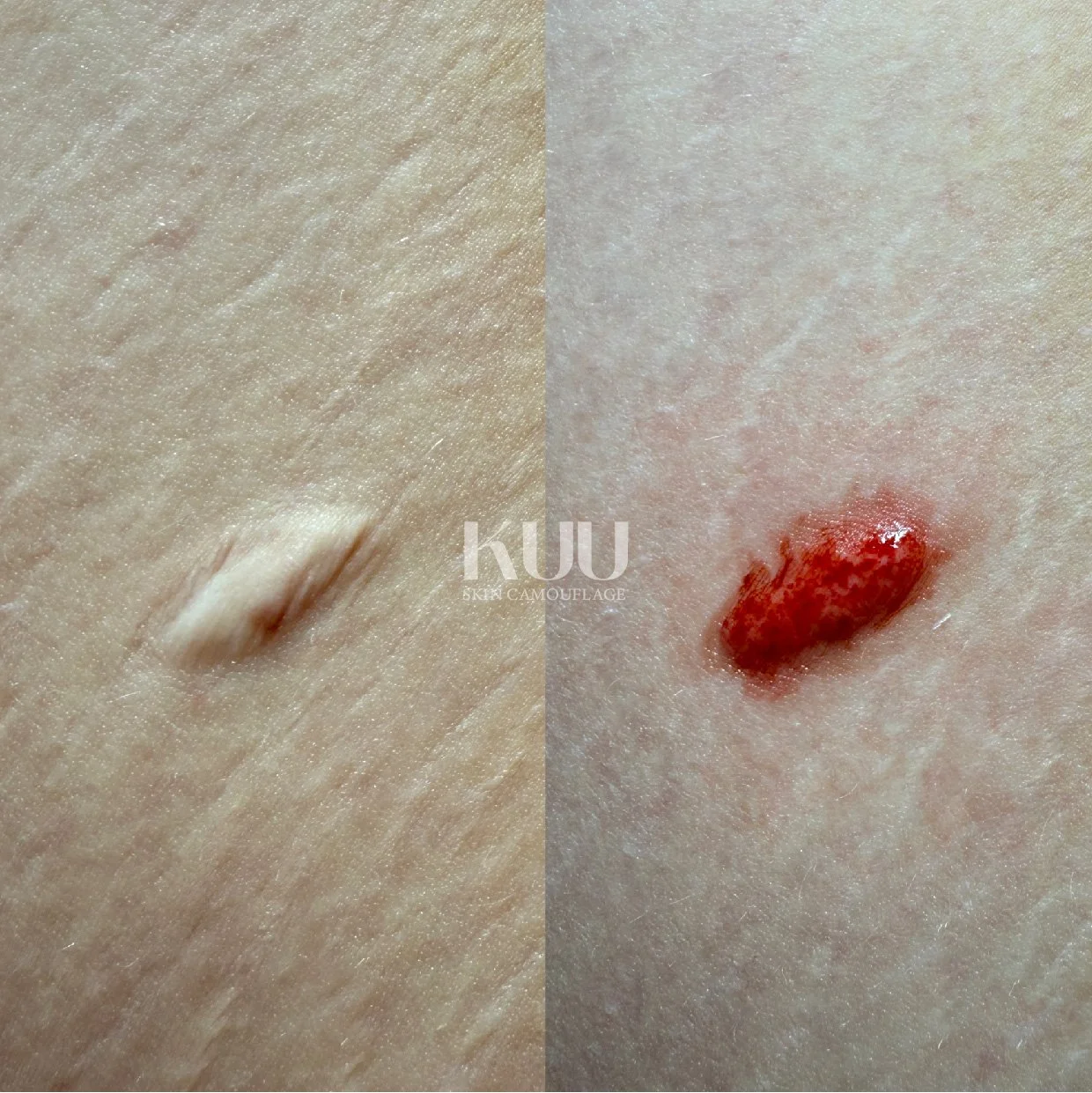
This photo shows before and immediately after 1 session of MCA Inkless Needling. Blood spots, redness and swelling is normal initially .
Many clients find the treatment more comfortable than expected. Scar tissue often contains fewer nerve endings than healthy skin, meaning sensation during treatment within the scar itself is usually very reduced.
How Many Sessions are Typically Required?
Most treatment plans involve between two and five sessions, spaced approximately six to eight weeks apart. This allows the skin sufficient time to complete its repair and remodelling processes between treatments.
The exact number of sessions required depends on factors such as the type, depth, and age of the scar or stretch mark, as well as individual tissue response. This is discussed in detail following assessment, and treatment plans are adapted as the skin responds.
How are Medical-Grade Serums Selected?
Medical-grade serum selection is based on tissue condition and treatment objectives, with formulations chosen to support cellular repair, collagen response, and controlled skin regeneration.
Serums may include peptides, vitamins and minerals, exosomes, and polynucleotides, and are selected on an individual basis. Where appropriate, multiple formulations may be used within a single treatment to address varying tissue characteristics within the same scar.
Safety, Suitability & Considerations
MCA Inkless Needling is a minimally invasive restorative treatment designed to improve the appearance, texture and tightness of mature, stable scars. While it is a considered and controlled procedure, it does involve opening the skin and, as with any skin-based treatment, carries potential risks.
Certain skin types and scar histories require additional care. Individuals who are prone to keloid or raised scarring, or who have previously experienced abnormal scarring following surgery or tattooing, may not be suitable candidates. Suitability is always discussed during consultation. Test patches will be performed in situations where skin needs to be approached with caution.
Active skin infections must be fully resolved prior to treatment.
Treatment is only considered once scar tissue is fully healed and mature to support safer application and more predictable results.
Get in touch
If you’re considering medical tattooing or restorative skin treatments, you’re welcome to get in touch.
This initial conversation offers a gentle first point of contact, allowing each treatment to be carefully considered, bespoke, and tailored appropriately to you